
4.75 mm, measured how? Reading the Altar II's thinnest-keyboard claim
EMO's Altar II went to Kickstarter calling itself the world's thinnest mechanical keyboard. Put it next to NuPhy, Lofree, Keychron and a 2021 Cherry switch and the headline number turns out to be the least comparable spec on the sheet.
On 10 November the British maker Electronic Materials Office (EMO) opened a Kickstarter for the Altar II, a 75% keyboard it lists at 4.75 mm and calls the world's thinnest mechanical keyboard. The same week Lofree shipped the Flow Lite 2, and NuPhy and Keychron are both selling low-profile boards built around quite different ideas.
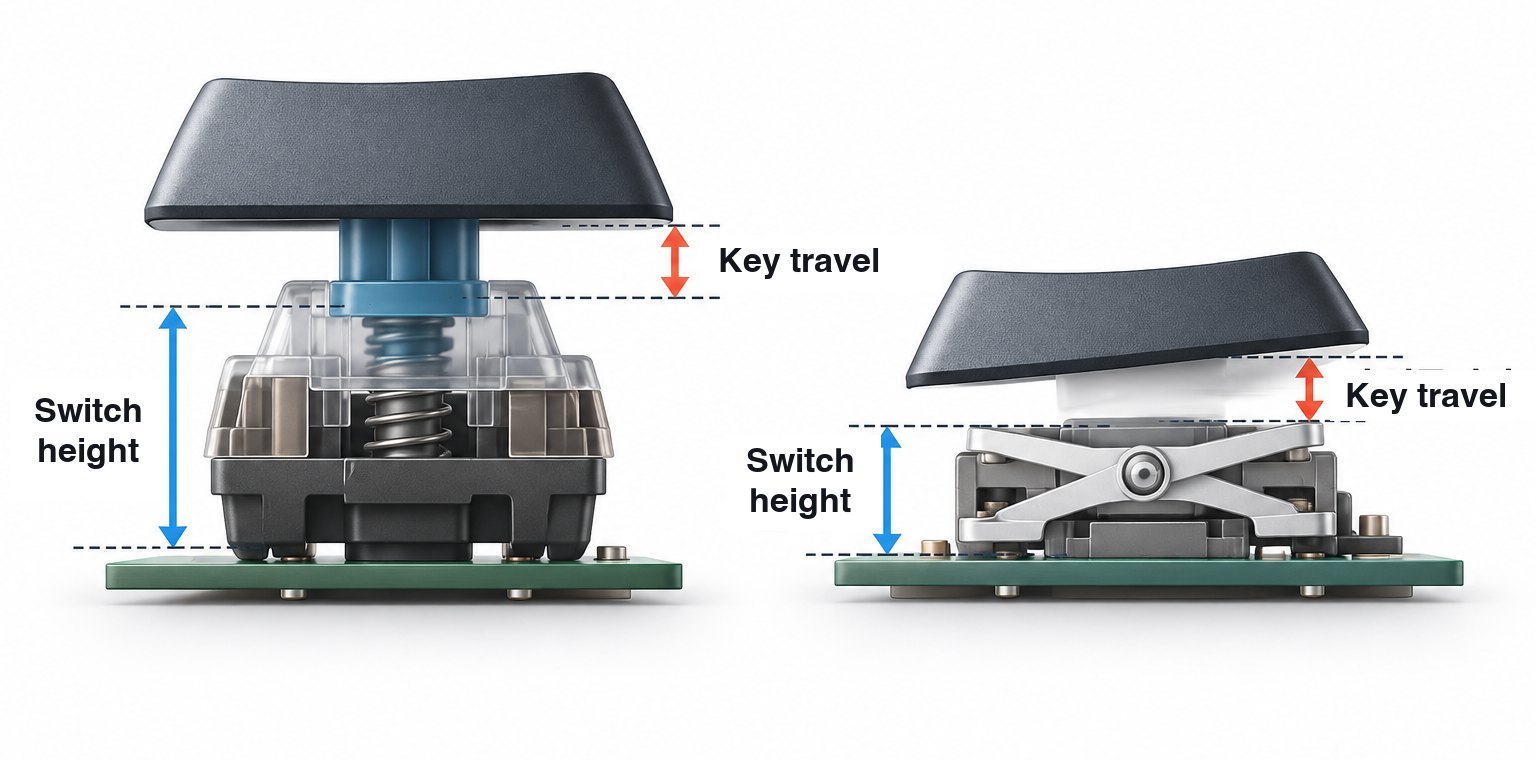
The temptation is to line the numbers up. It does not work. Manufacturers publish front height, case thickness or overall height including keycaps, and rarely say which. Switch height and key travel are separate figures again, and neither one determines the other. This article goes through what each company has actually published, and what the numbers can and cannot be compared on.
Altar II: a mechanical claim in a 4.75 mm case
EMO first showed the Altar II in August. It is a 75% board machined from a single aluminium block, 299 × 116.5 mm, and the company gives its height as 4.75 mm. That is far below anything else sold as low profile.
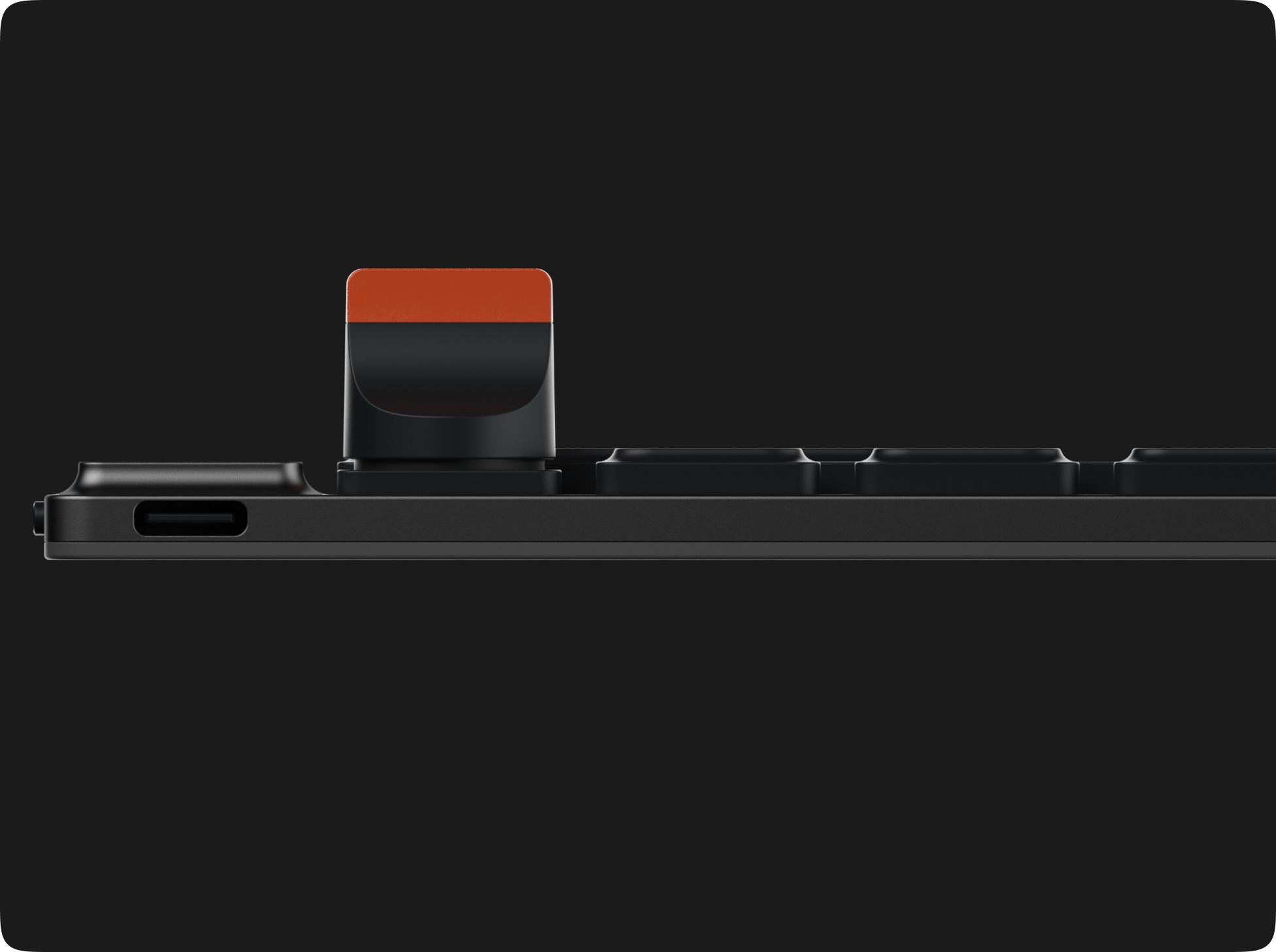
What the 4.75 mm measures deserves a closer look. EMO ties it to a sub-5 mm chassis, but the published specifications do not clearly separate it from overall height with keycaps. The company's own comparison page sets the board against Apple's Magic Keyboard and NuPhy's Air75, without saying whether every product was measured the same way.
The switch is EMO's own design rather than an MX-pattern part. The company calls it a dual steel arm scissor switch: two steel arms with a return spring mounted sideways rather than vertically, giving 1.8 mm of travel at 40 gf. EMO classifies it as fully mechanical. Since it is visibly a scissor mechanism, how its contact differs from a rubber-dome scissor switch, or from Cherry's MX ULP, needs more technical detail than has been released. Travel of 1.8 mm on its own says nothing about whether a switch is mechanical.
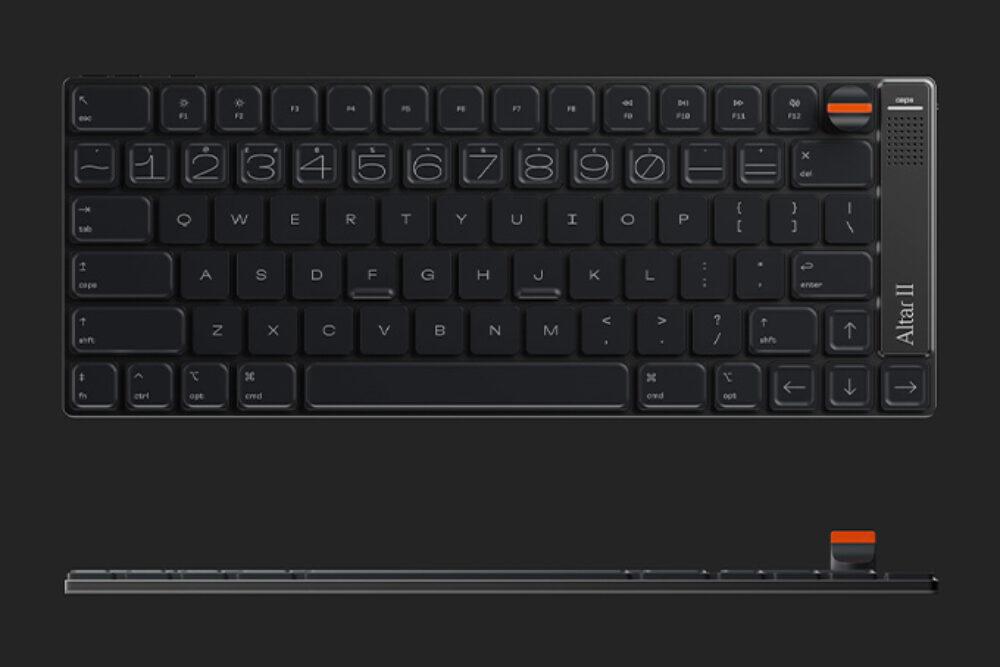
The rest of the spec sheet is more conventional for a premium board. A magnetically attached rotary dial, the M-Dial, handles volume and media with haptic feedback and comes in a standard and a low version. The keyboard itself has a haptic motor and a speaker that signal shortcuts, connection state and system notifications. There is red backlighting, two-channel Bluetooth 5.0 LE and USB-C. Firmware is ZMK, with a macOS configuration app promised. Battery capacity has not been published; EMO quotes up to 30 days of typical use.
Pricing is $280 for the first 48 hours, $300 for the rest of the campaign and a planned $350 retail. Earlier pre-order customers were quoted $249. Delivery is scheduled for early summer 2027. It is a pre-production crowdfunded product, so height, feel and durability are all claims to be checked against the shipped unit.
NuPhy went the other way and lengthened travel
Not every low-profile board is chasing minimum thickness.
NuPhy's Air75 V3 is a 75% board with a front height of 13.2 mm, an aluminium top and an ABS bottom. It uses Gateron Low-Profile 3.0 Nano switches with 3.5 mm of travel, long by low-profile standards. It is gasket mounted and hot-swappable, carries a 4,000 mAh battery, and NuPhy's lab figure with the backlight off is up to 1,200 hours. Launch price is $139.95.
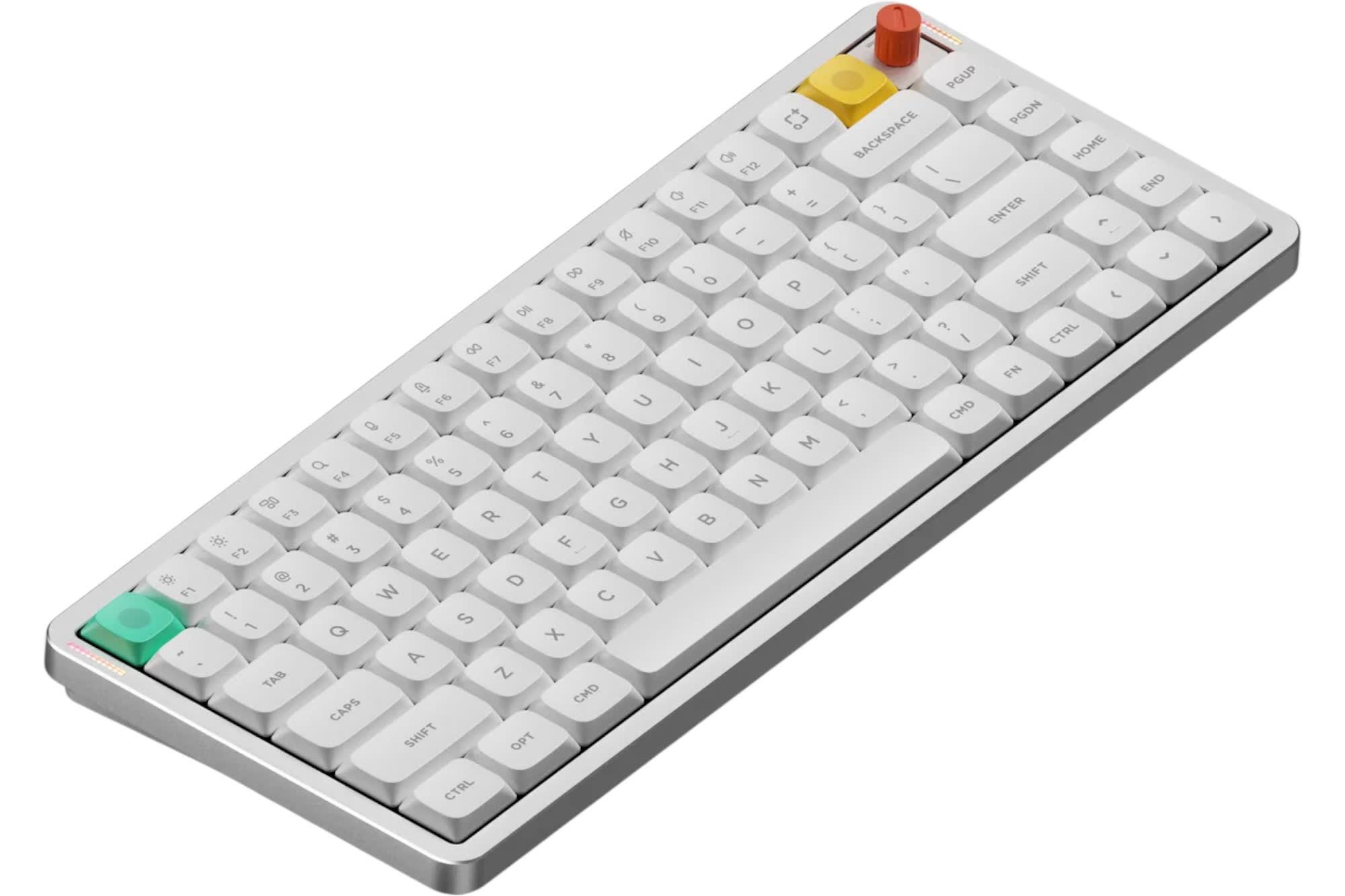
Shorter travel does not make a better low-profile keyboard. NuPhy's choice was to give up some thinness for a longer stroke and a gasket mount, and to put the typing feel first.
Keychron's K3 Ultra 8K is a third approach. Front height is 20.5 mm, with an aluminium frame, rosewood side trims and double-shot PBT keycaps. It ships with Keychron's Milk POM switches on a hot-swap PCB compatible with Gateron Low-Profile 2.0 parts, has a 2,600 mAh battery, and supports 8,000 Hz polling over cable and 2.4 GHz. The early-bird price when it went to Kickstarter in February was $105.
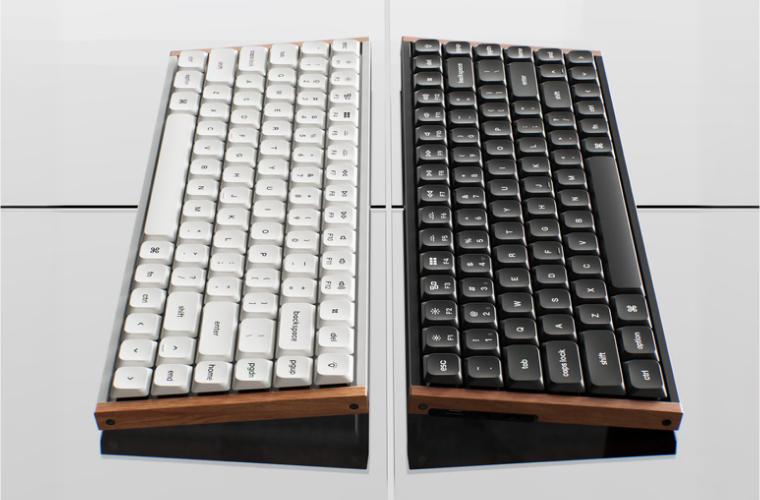
The K3 Ultra is less an ultra-thin design than a low-profile layout carrying high polling rates and customisation features.
Lofree Flow Lite 2: flatter case, bigger battery
Lofree released the Flow Lite 2 in early November in 84- and 100-key layouts, with a flatter ABS housing than the first version. The battery grows from 2,000 to 3,000 mAh, and Lofree quotes up to 100 hours over Bluetooth with the backlight off. Switches are a new 45 gf Echo linear, hot-swappable, and a small display shows battery, connection and OS profile. Prices are $109 for the 84-key and $119 for the 100-key, with a 20% launch discount in November bringing them to $87.20 and $95.20.
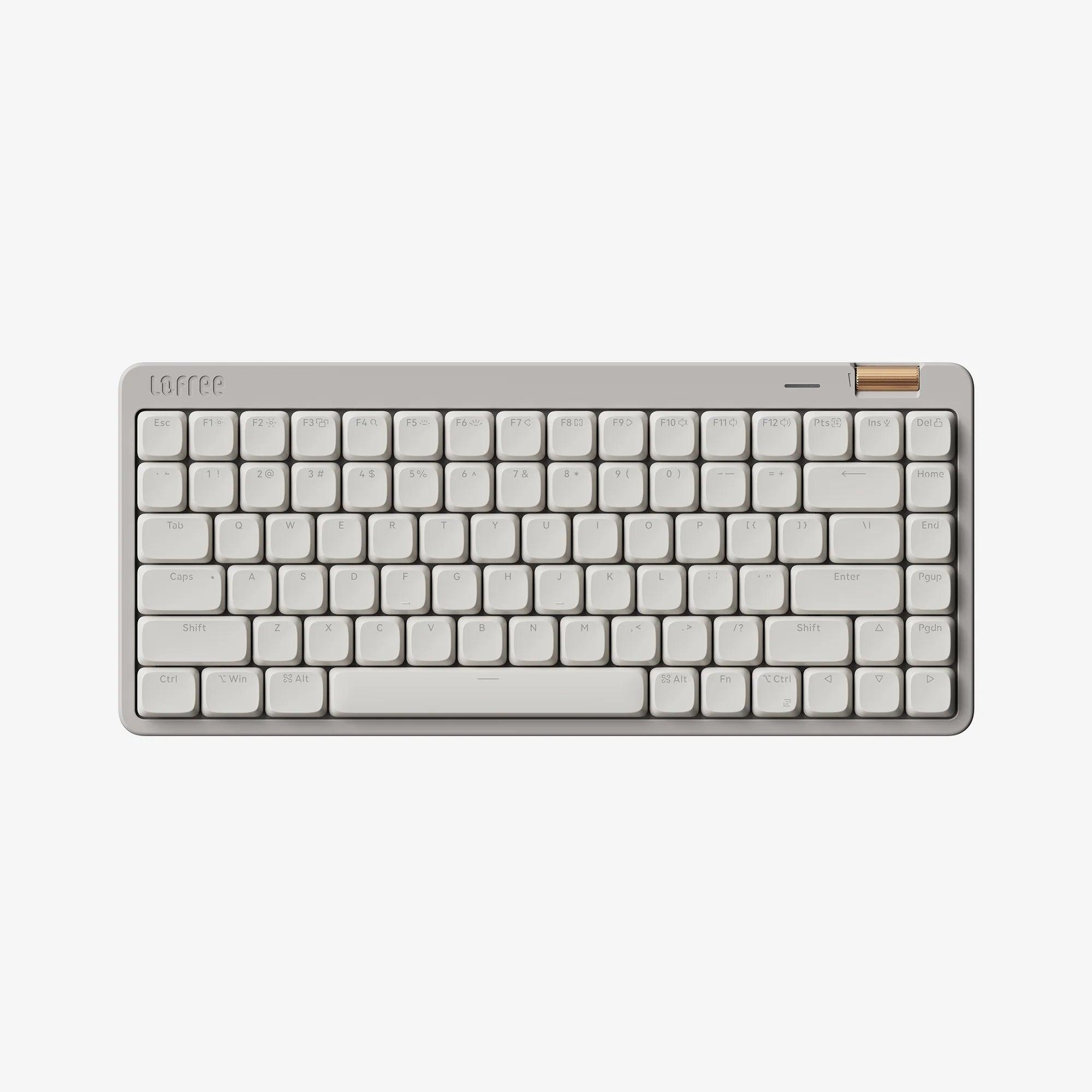
The one figure that is missing is height. The keyboard database keeb-finder lists the 84-key model at 317 × 143 × 22 mm, but it does not say whether 22 mm is front height or maximum height, or whether keycaps are included. The difference from the first Flow Lite cannot be judged from that number alone.
1.8 mm mechanical switches date from 2021
Ultra-thin mechanical switches did not begin with the Altar II.
Cherry introduced the MX Ultra Low Profile in 2021, first in Alienware's m15 R4 and m17 R4 laptops. The switch is about 3.5 mm tall and still has 1.8 mm of travel. It uses a stainless-steel support structure, a pre-tensioned spring and gold crosspoint contacts. The MX ULP Tactile actuates at 65 cN and is rated by Cherry for more than 50 million presses.
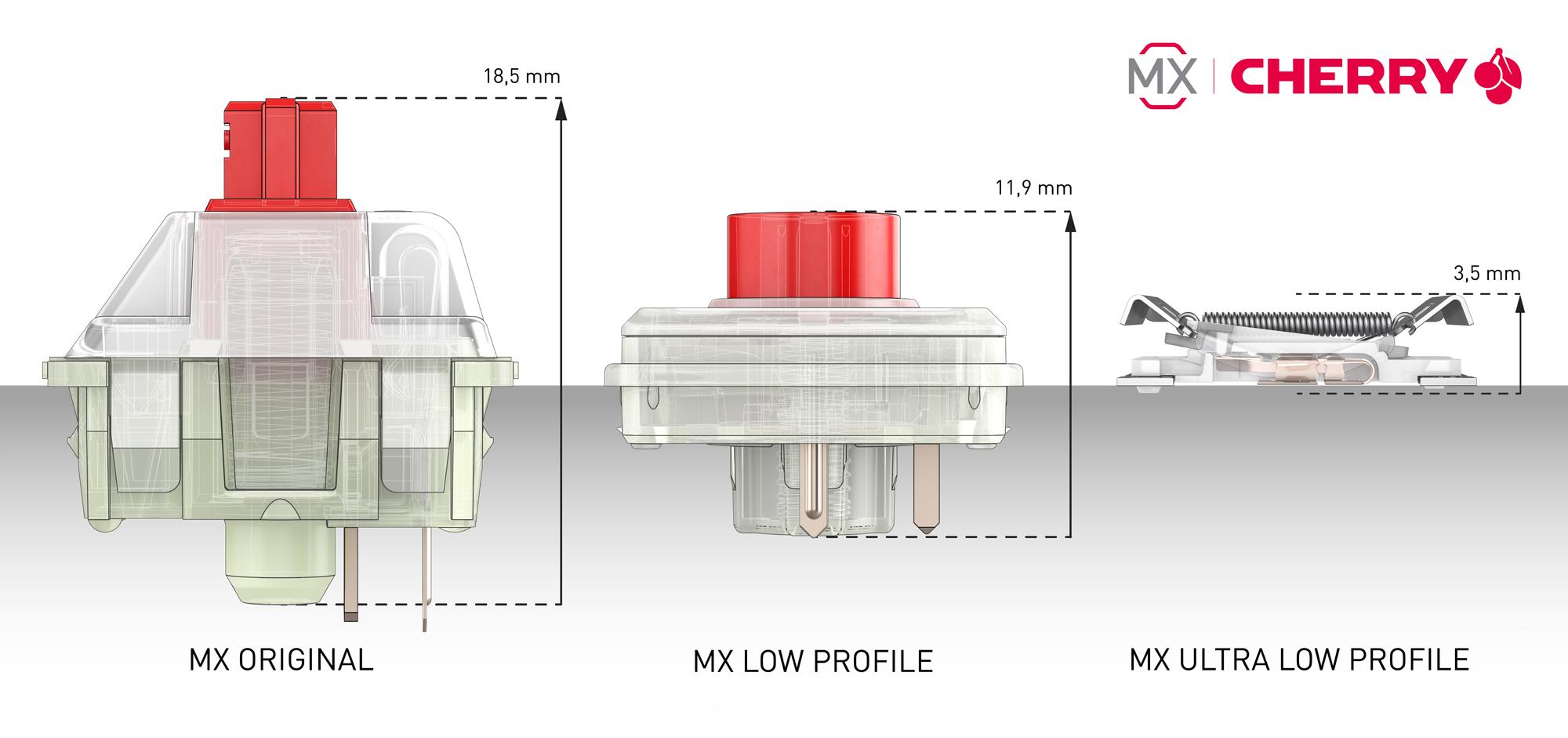
The point of the ULP was to shrink both the physical height and the internal mechanism while keeping a mechanical contact. The Altar II shares the metal support structure and the short travel, but it is not an MX ULP in a new case. They are two different designs arriving at a similar input.
They also do not share a yardstick. Cherry's 3.5 mm is the height of the switch. EMO's 4.75 mm is the height of a keyboard. The two numbers measure different objects and cannot be compared directly.
Side by side
| Published height | What it measures | Key travel | Battery | Price | |
|---|---|---|---|---|---|
| EMO Altar II | 4.75 mm | Manufacturer figure, basis not specified | 1.8 mm | Up to 30 days, capacity not published | $280–350 |
| NuPhy Air75 V3 | 13.2 mm | Front height | 3.5 mm | 4,000 mAh | $139.95 |
| Lofree Flow Lite 2 | 22 mm | Third-party database, basis unconfirmed | Not published | 3,000 mAh | From $109 |
| Keychron K3 Ultra | 20.5 mm | Front height | Depends on switch | 2,600 mAh | $105 early bird |
| Cherry MX ULP | About 3.5 mm | The switch itself | 1.8 mm | n/a | n/a |
Figures are from manufacturers and public listings. Because the measuring point and the inclusion of keycaps differ from product to product, the column is not a thickness ranking. Prices vary with timing and discounts.
Travel is not what makes a keyboard thin
The two ideas most often confused in this discussion are switch height and key travel.
Switch height is the physical dimension of the switch as a component. Key travel is the distance the key moves from rest to bottom. The finished height of a keyboard adds the keycap, the PCB, the plate, the case and the way everything inside is stacked.
So short travel does not guarantee a thin keyboard, and a long-travel switch can still end up in a relatively thin board if the PCB and case are designed for it. Kailh's Choc V2, the usual reference for low-profile mechanical switches, travels 3.2 mm; Gateron's KS-33 Low-Profile 2.0 about 3 mm depending on the model; NuPhy's Gateron Low-Profile 3.0 Nano stretches that to 3.5 mm. Cherry's MX ULP and the Altar II switch go the other way at 1.8 mm.
Pushing thickness down also means finding room for the PCB, the battery and the radio. The thinner the case, the tighter those constraints, but thickness by itself does not tell you battery capacity or run time. That is why the Altar II's 30-day figure, published without a capacity, is a claim to verify rather than a spec. Real endurance depends on backlight, wireless, the haptic motor and how the board is used.
Ultra-thin designs can also cost you customisation. A proprietary switch that is not MX, Choc or KS-33 compatible narrows the choice of replacement switches and keycaps. Whether the Altar II is compatible with existing low-profile parts, or hot-swappable at all, has not been confirmed.
Thinner, or deeper
Low-profile keyboards are not developing along a single axis of thinness.
The Altar II combines 1.8 mm travel with an ultra-thin case to push at the physical limits of a mechanical board. Cherry's MX ULP did the laptop version of that five years earlier. NuPhy's Air75 V3 goes the opposite way with 3.5 mm travel and a gasket mount. Lofree's Flow Lite 2 spends its update on battery and convenience; Keychron's K3 Ultra on fast wireless and swappable switches.
The competition has moved from how thin a keyboard can be to what feel and what features fit inside a given height.
The Altar II's 4.75 mm is a number worth paying attention to. Checking the "world's thinnest mechanical keyboard" claim, though, means putting the shipped product, its switch mechanism and its typing feel on the same scale as everything else, and that scale does not exist yet. Whether the production board holds this design when it ships in mid-2027, and what the thinness turns out to mean at the desk, are the questions left open.
Notes
- This is an English version of a KBDMania article by 4℃, published on the Korean site on 12 November 2026.
- Prices are the manufacturers' US figures at the time of writing. Product photos are from the manufacturers' press and product pages; the cover diagram was generated with ChatGPT for the Korean article and relabelled in English.
- The English text was drafted with AI assistance and checked against the linked sources before publishing, as described on the About page.
Sources
The product pages, announcements and reports this article draws on. The Korean original by 4℃ is linked first.
- 로우프로파일 키보드 얇기 경쟁, 어디까지 왔나 (4℃, KBDMania, 2026-11-12, Korean original)
- Electronic Materials Office, Altar II product page and specifications
- EMO, Introducing Altar II, 2026-08-06
- Daring Fireball, Altar II keyboard on Kickstarter, 2026-11-10
- NuPhy Air75 V3, official specifications
- KitGuru, Lofree launches Flow Lite 2
- keeb-finder, Lofree Flow Lite 2 listing
- Notebookcheck, Keychron K3 Ultra and K3 HE launch
- Cherry, MX ULP Tactile official specifications
- Tom's Hardware, Cherry MX Ultra Low Profile switches tested
- kbd.news, Kailh Choc V2 vs Gateron KS-33 Low Profile 2.0