Gongje: How Korean Group Buys Worked, and What Everything Cost in 2012
The word 공제 means something narrower than "group buy". It came with rules about profit, resale and respect, and a price list the community kept.
English-speaking hobbyists use "group buy" for everything from a GMK keycap interest check to a 1,000-unit keyboard pre-order run by a company. Korean hobbyists have two words, and the difference between them explains a lot about how the early customs were made and priced.
공구 (gong-gu) is short for 공동구매, "joint purchase." A member collects orders for something that already exists, often from overseas, and everyone shares the shipping. Keycaps from a Western group buy reached Korea this way; the 2012 price list below mentions "expedition" (원정대) keycaps, meaning sets a Korean member had brought back from geekhack buys.
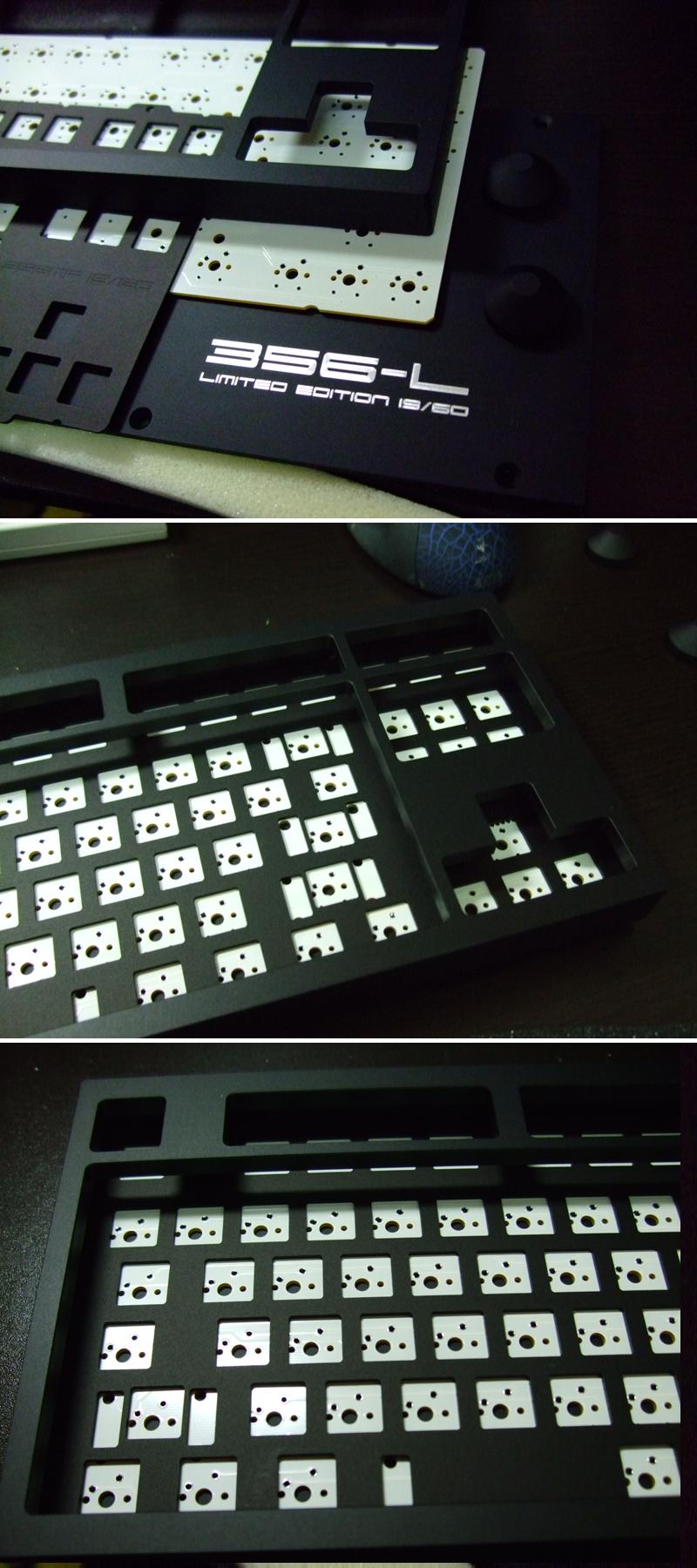
공제 (gong-je) is short for 공동제작, "joint production." A member designs something, has it made in a fixed quantity, and distributes it to the people who signed up. The 356-L, the KMAC and the LZ were gongje. The maker is called the 공제자 (the one running the gongje), and the word carries an expectation that the Western term does not: the run is not supposed to make money.
The unwritten rule
That expectation surfaces whenever a run attracts attention. When a member known as 플라나티스타 announced an aluminum housing for the Vortex Poker in June 2012, he spent the first half of the post defending himself against the suggestion that he was "doing business." People had demanded receipts. "I have never once thought of this as a way to make a profit," he wrote. "How much would I make from making these anyway?" He had, he admitted, squeezed his supplier hard on price because he knew KBDMania members, and both he and the supplier were losing money. Then he named the other gongje makers, KMAC's included, and wrote: "I respect them. Who dares throw stones at that effort? To those people I'd say: try doing it yourself."
The other side of the rule concerns the buyers. In June 2010 a member called wilhelm wrote a short post about the price of custom keyboards after seeing marketplace listings he could not understand. He had sold his own 356CL below cost. Now, he said, "there seems to be some custom keyboard inflation on the marketplace." Two years later he wrote the post that the community would keep screenshotting for years: "Prices of gongu and gongje items."
The 2012 price list
Wilhelm's June 2012 post argued that reselling a gongje item at a premium betrayed the maker's sacrifice. "These are limited customs that the maker produced at a lower price by absorbing countless trials and losses. They are not commercial products made for profit." Reselling them above cost, he wrote, "trades the maker's public contribution for private gain." He asked people to list at original price or below, and if they wanted to flip things, to "go do it on Joonggonara" (Korea's general used-goods site). Then he reproduced a price list another member had compiled. Prices are in 점 (jeom), the community's slang unit for 10,000 won, and refer to unassembled kits.
| Custom keyboard (unassembled) | Jeom | Approx. won |
|---|---|---|
| 356 Dark Edition (닭클) | 33 | ₩330,000 |
| 356CL (삼클) | 38 | ₩380,000 |
| 356-N mk2 (삼엔) | 30 | ₩300,000 |
| 356 mini (삼미니) | 38 | ₩380,000 |
| The Cheat (더치트), full package with Soware keycaps and switches | 29.9 | ₩299,000 |
| The Cheat, housing only (marketplace drop) | 23 | ₩230,000 |
| Koala (코알라) | 37 | ₩370,000 |
| KMAC (PCB pre-soldered, alu plate, alu housing, alu two-stage feet) | 28 | ₩280,000 |
| KMAC LE | 22 | ₩220,000 |
| 또뀨 (DK Saver) | 28 | ₩280,000 |
| A87 stainless (SUS) housing | 11.5 | ₩115,000 |
| 356 pad | 22 | ₩220,000 |
The same list priced PCBs and plates (a 356CL PCB and plate at 8 jeom, an A87 PCB at about 3) and keycaps, where the spread is striking: a thick dye-sublimated set at 30 to 40 jeom, a Soware base set at 3, a Dolch replica base set at 3.8 with winkeyless option at 0.4, and a "geekhack Cream Cheese" set brought in by a member at 9.7. A set from the "expedition" buys, Cream Cheese or Graphite, was 5.55 with a 0.75 winkeyless add-on.
Comments on the post ran to "I need to save this," "a must-know for a total beginner like me," and one correction: the 또뀨 (DK Saver) price was 28, not what the list had said. The list was edited.
The 1 jeom problem
Notice what the list does not say: it does not say what these things are worth. It says what they cost. The whole point of the post was that those should be the same number, or that the second should be lower after use. The counter-argument appeared in the 2010 thread already: "It's the law of the marketplace. If more people are looking, the price goes up." Another member suggested the real culprits were not the original buyers but people who picked up "cool sales" (쿨매, a below-market no-haggle listing) and relisted them under other IDs.
KBDMania's administration had its own tool for this. In August 2009 the site introduced a points-and-levels system for the marketplace. Selling required Level 1, which meant 150 points; sign-up and login no longer earned points; writing a review or a tip earned 20; marketplace posts earned nothing. The stated goal was to stop people registering only to sell. The 143 comments underneath suggest the community mostly approved, with one member complaining that 150 points was too easy a wall: "that's thirty comments."
Why the word matters
When Western writers describe Korean customs as "artisan" or "boutique," they are reaching for a word that describes the objects. Gongje describes the relationship. A maker who would rather lose money than be called a merchant; buyers who sign up in minutes and then police each other's resale prices for a decade; an administrator adjusting a points table to keep the marketplace honest. The aluminum was the easy part.
Sources in the KBDMania archive
These are the original Korean posts this article is built from. They are written by community members; the English text above is our own summary, not a translation.